March 24, 2026


Españolans Need to Rise Up and Light a Fire
Edgar Allan Poe died of unknown cause surrounded by mysterious circumstances outside Gunner’s Hall Tavern in Baltimore, Maryland, in 1849. He is best known for great works such as “The Tell-Tale Heart,” “The Pit and the Pendulum” and “The Murders in the Rue Morgue.”
Poe wrote between the macabre, the surreal and the real. His stories, like the reality of Española politics, take wild and grave turns. You find yourself rereading the pages to ensure your eyes doth not deceive.
If you don’t pay close enough attention, as in “The Purloined Letter,” pages get folded and refolded to conceal the truth.
Then get folded again to hide between the mask of fake virtuosity and feigned ignorance.
The stench of smugness and self-importance reeks through the walls and carpets of city hall. Like Poe’s “Purloined Letter” character known only as “Minister D — ” current election administrators prefer to obfuscate the truth with smoke and mirrors to bend the odds in their favor. But we won’t have it.
Keep an eye out for their shenanigans.
For every election, candidates are given the right to view the list of names of people who voted each day during early voting.
That means the Española city clerk is responsible for collecting and disseminating the names of folks who come in each day to vote.
City clerks have done this for every election cycle in the past and are required to do so, according to the New Mexico Secretary of State’s Election Handbook. Candidates use this information to get out the vote.
They cross off the names of people who voted to concentrate on those who have yet to get to the polls. It is a critical tool that can make or break a campaign.
But Española’s city clerk has refused to provide this data to candidates.
Well, perhaps not all of them. Certainly this information is available to her. I wouldn’t be surprised if it made its way to certain people.
The city clerk shamelessly notified candidates via email that she spoke with a representative from the secretary of state’s office who cited a small section of code.
She extrapolated that to mean the report is not available for municipal elections (emphasis hers). The statute, however, seems clear: Section 1:6:6E — upon request by a candidate the Secretary of State or county clerk shall transmit a complete list daily (edited for brevity).
One might say it is the responsibility of the county clerk and not the city clerk. Not true. For a municipal election, procedures normally conducted by the county clerk shall be conducted by the city clerk, according to Section 1:22:3.1D2.
Why is the city trying so hard to prevent candidates from getting such important information? Is it incompetence or subterfuge? Even if the statute goes against my reading, why not provide the information anyway? It is public information and easily available. It gives the impression that the clerk is trying to hide something at best or trying to sway the election at worst.
The idea that early voting helps democracy lies in fallacy. We don’t need four extra weeks to get people who want to make a difference into the polls.
They can easily do that on Election Day or perhaps the week prior to the election.
Early voting can be used by those who are fueled by desperation and depravity. Early voting awakens the spirit of the Edgar Allan Poe macabre. Four years ago, the city clerk’s office filed so many complaints to the secretary of state’s office for what appeared to be wrongdoing that the secretary of state’s office literally told the city of Española to stop calling.
Either they chose to look the other way or they are a part of the problem. Española wallows in pain, misery and self-contempt. It is tormented by the sound of its beating heart.
Those who know me will know my words are true. There was one voter we remember.
Her memory and her innocence haunt us to this day. She came to City Hall to vote. It was during the first few weeks of early voting and she wasn’t alone. She came in with a “representative.”
You can do that, you know. If someone requires “help” and gets coerced to ask for it, we are legally obliged to allow their representative to help them.
This woman was crying and showed signs of dementia. She didn’t know where she was or what she was doing. The city clerk’s heart broke and shattered to oblivion.
She had to leave the room or she felt she would die. The woman’s representative coaxed her into asking for his help. He wasn’t family. Just her ride from her residence where she received assistance. Crying and confused, she asked for his help. He shuffled her behind the “safety” of a voting booth and “helped” her cast her ballot.
Our hearts still break. The city clerks who were present talk about what happened even to this day. We are sad for her. We are sad for Española. We are sad for humanity. Keep in mind, that’s what people do for a vote. It’s what people do for power. And look where it has gotten us. We need to change.
In Poe’s “The Purloined Letter,” the detective adroitly says, “We had been sitting in the dark, and Dupin now arose for the purpose of lighting a lamp.”
I hope the people of the city of Española are like Dupin. Rising to light a fire. To light a fire of truth and light, and change from what we’ve had over the last four years. It’s ironic that no one knows how Edgar Allan Poe died. He was found delirious, disheveled and wearing someone else’s clothes. It was Election Day in 1849.
It’s ironic because one of the theories posed by historians is that he died of cooping. Cooping was a 19th century American form of voter fraud where gangs kidnapped victims — often transients or intoxicated individuals — drugged or beat them (or offered them money or alcohol) and forced them to vote. Victims were kept in secured rooms or “coops” until needed to vote. It’s irony. Until it’s not.
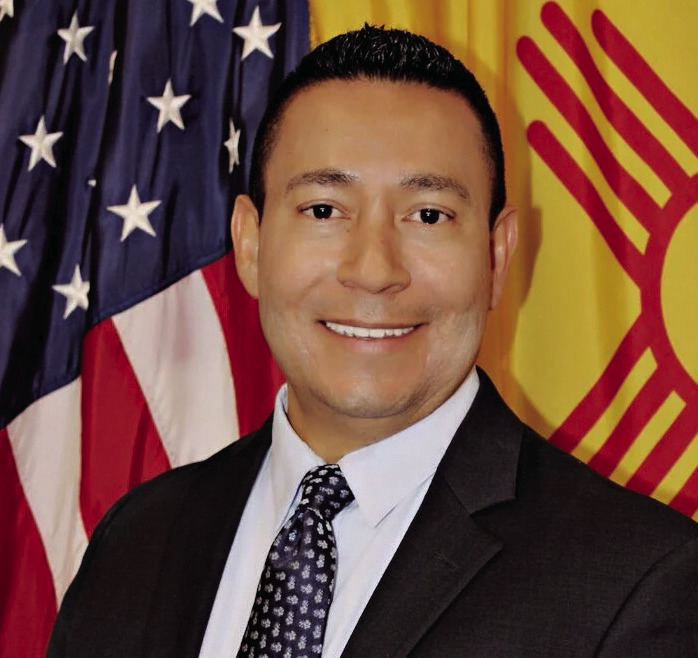
Javier Sanchez is an El Rito Media columnist, former Española mayor, and restaurant owner.