March 24, 2026


Voting Could Get Harder in NM if Congress Passes the SAVE Act
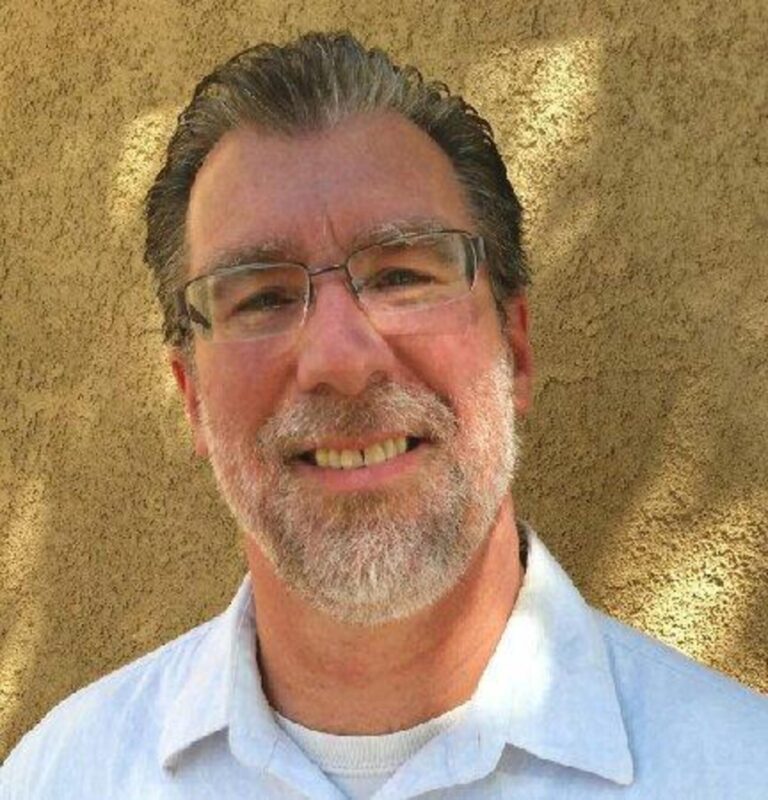
By Trip Jennings
Recently, a New Hampshire man told the Associated Press of his dismay at learning last fall that he couldn’t vote in local elections without proving he was a U.S. citizen. He had voted before, but this time around, he needed a passport or birth certificate to re-register to vote, he recalled.
Born in the U.S., the man had left the U.S. only once in his life, for a trip when he was in the seventh grade to go to Canada to see Niagara Falls, according to the AP.
A combination of factors triggered the heightened scrutiny by poll workers over whether the man was a U.S. citizen or not: the state of New Hamp-shire had recently enacted a new proof of citizenship voting law; and the man had moved within the state, triggering the need for him to re-register to vote using his new address.
Ultimately, the man was able to re-register and vote, according to the AP, but only after he presented his birth certificate, which, luckily, he had re-cently retrieved from his parents’ home.
So, why does what happened in New Hampshire matter in New Mexico?
Because the man’s experience offers a window into what millions of Americans, including many New Mexicans, might encounter at the polls if the Republican-controlled Congress passes legislation known as the SAVE Act.
The bill, which passed the U.S. House of Representatives last month and now awaits debate in the U.S. Senate, “would establish additional re-quirements for states, particularly concerning providing and verifying voter ID during the registration and voting processes,” according to the Con-gressional Research Service.
That might sound like a good idea, guaranteeing non-citizens aren’t vot-ing in elections. A lot of people likely support that goal. But it turns out,
documented cases of non-citizens voting in U.S. elections are extraordi-narily rare.
For example, in Ohio, the secretary of state alleged hundreds of cases of non-citizens voting in elections. But upon review, only a solitary case was found.
And in Utah, officials reviewed the voting records for 2 million people through a complex process and identified one confirmed instance of a non-citizen registering to vote, although there was no verification the per-son had voted in an election.
Here in New Mexico, similar suggestions have been made about non-citizens voting, but nothing has come of it.
Non-citizen voting in U.S. elections is not the bogeyman some people claim it is, as measured by documented research and scholarship.
But Republicans in Congress are pushing the SAVE Act forward anyway. And, as with proving non-citizen voting fraud, how you go about asking U.S. citizens to prove they are actually U.S. citizens is not as simple as it sounds, either.
The National Conference of State Legislatures, a resource for state law-makers and state legislatures across the country, highlighted a recent University of Maryland study that “indicates that as many as 21 million eligible voters do not have easy access to documents proving citizenship” that would be required by the SAVE Act.
This observation hits close to home. For years, I searched for my birth certificate issued by the state of Georgia when I was born. I never found it. Because we’ve moved around the country a half a dozen times over the past 30 plus years, I resigned myself to the fact I had lost it amid all the moves. I requested and received a copy from the state of Georgia’s Vital Records division. Only after my mother’s death in 2021 did I discover my original birth certificate in my parents’ safe deposit box at a local bank in Augusta, Ga.
Had the SAVE Act been in effect before 2021, and if I did not have a U.S. passport, it is unclear how difficult it would have been for me to register to vote (it is unclear if copies of birth certificates count as an acceptable document.)
The SAVE Act, as passed by the U.S. House, allows a person who wants to register to vote in federal elections but who cannot present a birth certificate or a passport, to use other documents and attest under the penal-ty of perjury they are a U.S. citizen.
That’s a lot.
Beyond my own experience, so many questions arise: what are women who took their husbands’ names upon marriage supposed to do when their names do not match the names that are on their birth certificates, and they do not have passports?
This sounds far-fetched.
The Trump administration has said there is “zero validity” to the fear that the law might affect married women wanting to vote.
But Rebekah Caruthers, president and CEO at the Fair Elections Center, a nonpartisan voting rights and reform organization, told the Associated Press via an email:
“If this bill passes, it would deny millions of eligible Americans their fundamental freedom to vote. This includes millions of people who make up your communities, including married women, people of color and voters who live in rural areas.”
The League of Women Voters, a century-old national organization, agrees with Caruthers.
Personally, I know a couple of friends who are very worried about this.
And what of military veterans? Military IDs are on a list of documents that can be used for identification. But they are not enough in and of them-selves to prove U.S. citizenship. In addition to military voters having to show documentation every time they move, a military ID “must be accompanied by a military “record of service” that indicates the person’s birth-place was in the U.S., according to various analyses of the SAVE Act.
We have a test case to see if the SAVE Act might work in the real world: Kansas.
The state passed a similar law in 2011, which went into effect in 2013. It is now on hold, blocked by a federal judge and a federal appeals court, after the law kept more than 31,000 U.S. citizens from voting who were other-wise eligible to vote.
That does not seem like a good harbinger for democracy if the SAVE Act passes.
Trip Jennings started his career in Georgia at his hometown newspaper, The Augusta Chronicle, before working at newspapers in California, Florida and Connecticut. Since 2005, Trip has covered politics and state government for the Albuquerque Journal, The New Mexico Independent and the Santa Fe New Mexican. He holds a Master’s of Divinity from Columbia Theological Seminary in De-catur, Ga. In 2012, he co-founded New Mexico In Depth.